
How Drive In Racking Works
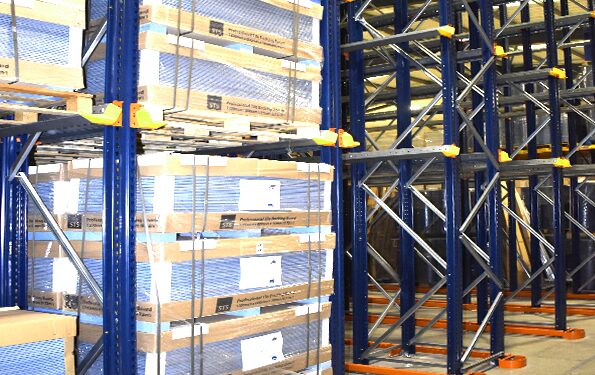
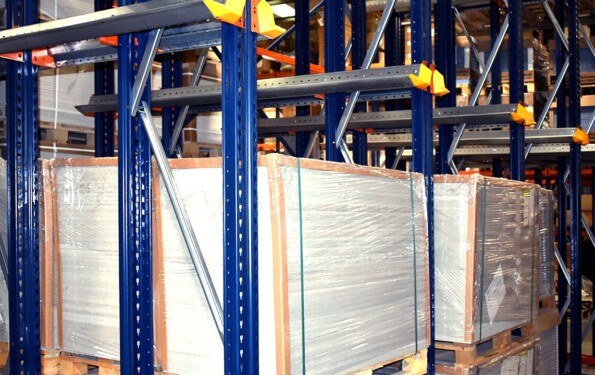
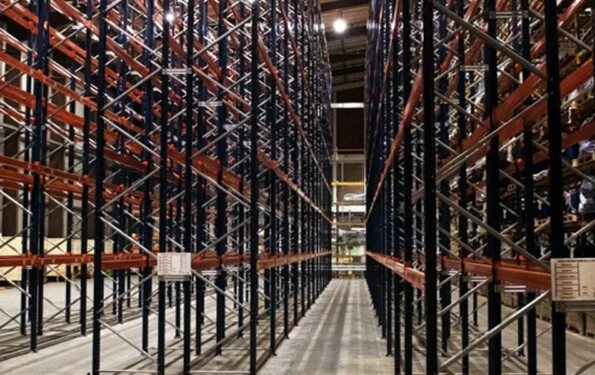
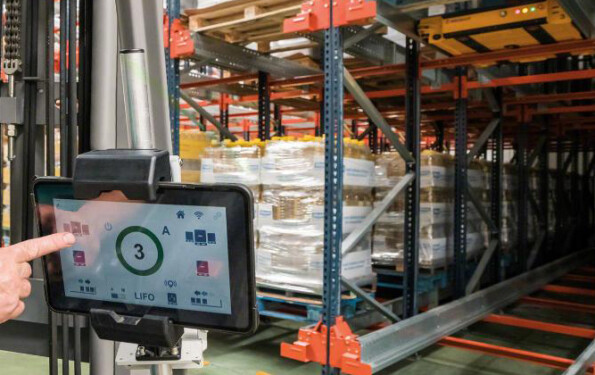
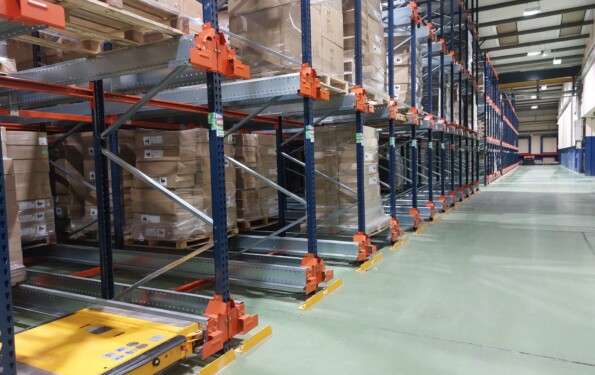
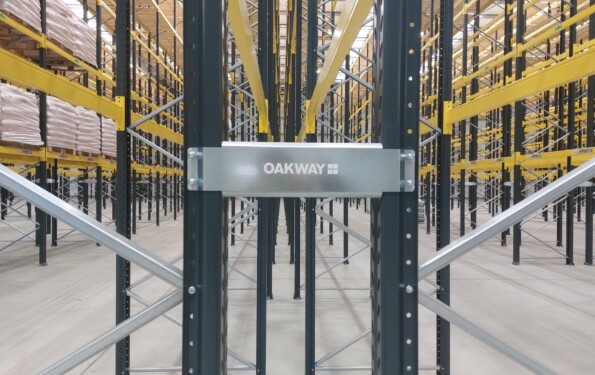
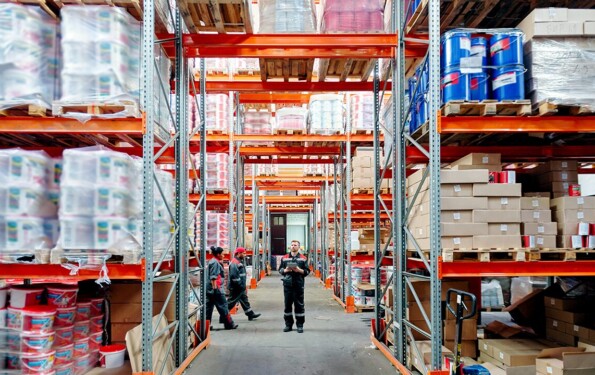
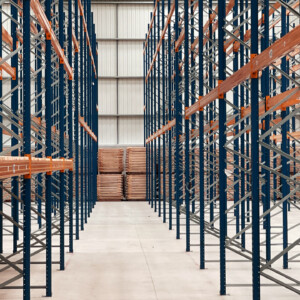
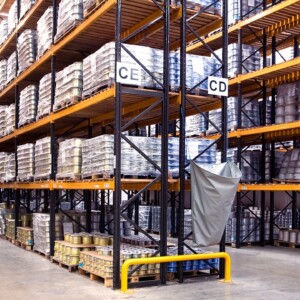
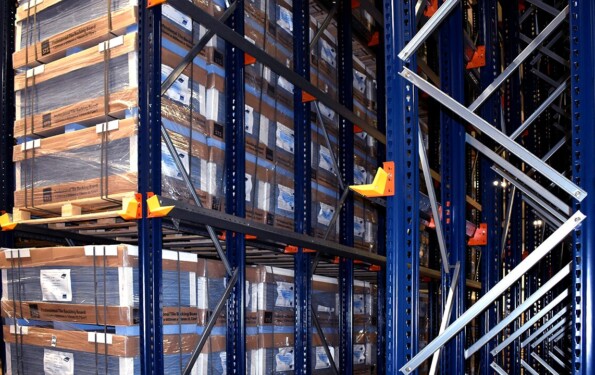
Drive-in racking typically operates on a last-in, first-out (LIFO) storage principle. Forklift trucks enter the racking structure from a single access aisle and travel into deep storage lanes to place or retrieve pallets. Steel pallet support rails hold pallets on either side, allowing forklifts to move safely through the system while storing multiple pallets deep within each lane.
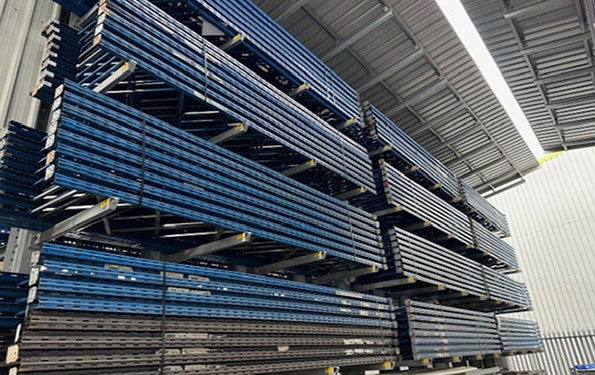
Core components usually include upright frames, pallet support rails, lane guide rails for forklift movement, rack protection, and deep storage lanes designed for high-density pallet storage.
Drive-in racking can also be configured as drive-through racking, which enables a first-in, first-out (FIFO) flow by allowing forklifts to access pallets from both sides of the system. This approach is often used in industries where products have a shelf life, such as food and beverage distribution.
For operations storing long-life or non-perishable goods, a LIFO system is often the most efficient solution for maximising storage density while handling large volumes of similar products.