• 19 Years' Experience
  • 700+ Shuttles
  • 10 Countries
  • CDM Principal Contractor

Semi & Fully Automated Systems UK

Oakway designs and manufactures 2-way and 4-way shuttle systems, bringing together equipment, software and design expertise to match your products, processes and growth plans. Our solutions range from semi-automated pallet storage to fully automated systems.

Automated shuttle system

What Are Warehouse Automation Systems?

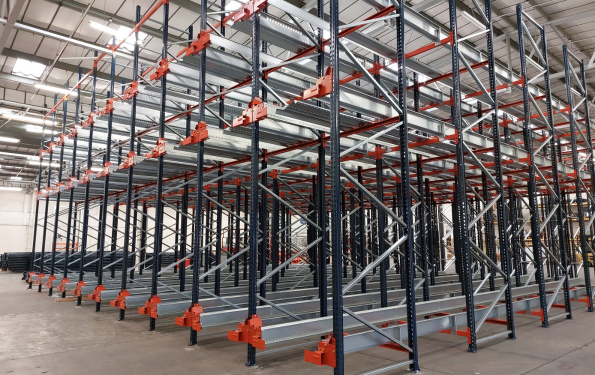
Warehouse automation systems use mechanical equipment and control software to store, move and retrieve goods with less manual intervention. Shuttle-based automated storage and retrieval systems (AS/RS) combine high-density racking with shuttles, lifts and associated handling equipment to move loads between storage locations and designated collection or transfer points.

By reducing access aisles and making better use of building height, automated storage can increase capacity within an existing warehouse footprint. Fast, controlled pallet movements can accelerate handling and support a consistent flow of goods, while reduced reliance on forklift trucks and manual handling can lower operating costs and free people for other tasks. Fully automated configurations can remove the need for routine forklift handling within the storage area. The scale of capacity gains and labour savings depends on the layout and system design.

Who Are Automated Storage Systems For?

Automated storage systems can suit businesses across a wide range of sectors and sizes. The right fit depends on your inventory profile, throughput and stock rotation. Small and medium-sized businesses can also benefit where the scale of investment matches their operational needs and expected savings. Potential applications include food and beverage businesses, importers and exporters, and pet food and animal feed operations, depending on their stock and handling profiles.

A strong business case can arise where automated storage reduces existing offsite storage and transport costs or avoids the need for additional capacity from a third-party logistics provider (3PL) as the business grows. Additional storage capacity may also support more efficient purchasing and logistics practices, where the resulting savings outweigh additional stockholding and system costs.

It works particularly well for operations where:

  • Products are stored in batches, with lane allocation and retrieval sequences designed around the SKU mix.
  • Multiple pallets of the same SKU are held in storage.
  • Stock requires compact storage, with the system configured around its turnover rate and retrieval requirements. Deep-lane configurations are particularly suitable where pallets can be retrieved in planned sequences.
Talk to a specialist

Types of Warehouse Automation: 2-Way and 4-Way Shuttle Systems

food and bev shuttle

2-Way Pallet Shuttle Systems

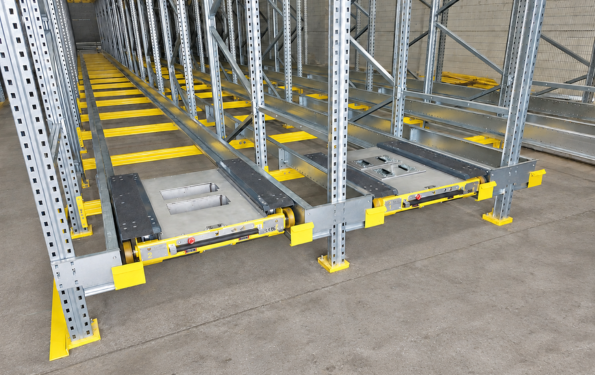
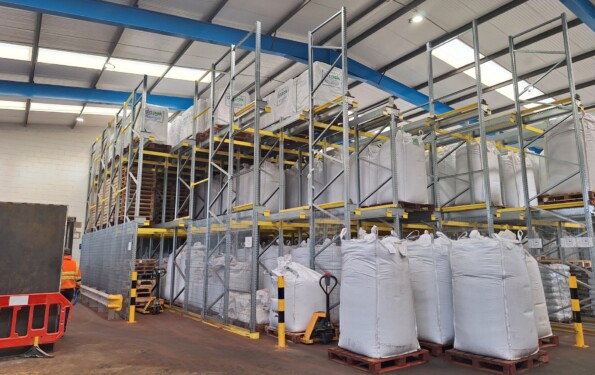
A 2-way pallet shuttle system provides an accessible entry point into warehouse automation. A powered shuttle moves pallets forwards and backwards within deep storage lanes, while a forklift places pallets at the lane entrance and transfers the shuttle between lanes. Like pallet live and drive-in racking, it provides high-density storage. The shuttle removes the need for forklifts to enter the storage lanes. Investment is typically lower than for a fully automated installation, and capacity or handling performance can be expanded through additional lanes and shuttles, subject to the system design. It is particularly suited to operations holding multiple pallets per SKU, with lane allocation planned around stock access and rotation requirements.

coca cola shuttle

2-Way Shuttle Systems with Movers and Lifts

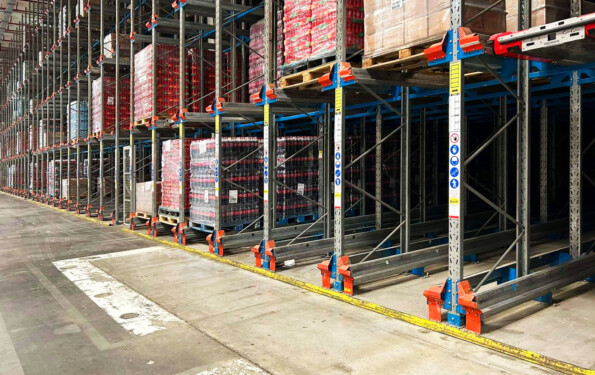
Combining 2-way shuttles with automated movers and lifts creates a fully automated storage and retrieval system. The shuttle handles movement within each storage lane, the mover transfers loads or shuttles between lanes, and the lift connects storage levels. Integrated conveyor lines carry pallets into and out of the system, removing the need for routine forklift handling within the automated storage area. This configuration suits businesses seeking to automate repetitive pallet movements and connect storage with production, goods-in or dispatch processes.

4-Way Pallet Shuttle Systems

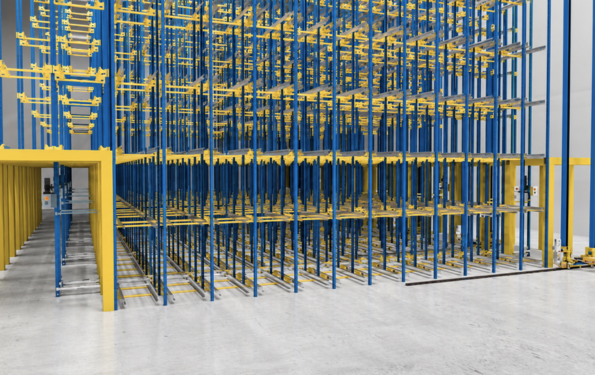
A 4-way shuttle system provides fully automated storage with movement in two horizontal directions across the racking, supported by lifts for transfers between levels. This flexibility offers more routing options and can support a broader mix of SKUs and demanding throughput requirements. Shuttles can serve different storage lanes, allowing movements to be coordinated around changing workloads. Capacity and throughput are designed around the combination of shuttles, lifts, conveyors and storage layout, giving businesses a flexible platform for handling growing stock volumes and more complex pallet flows.

Request a Quote

Bespoke Shuttle Manufacturing and Warehouse Control Software

Oakway brings shuttle manufacturing and warehouse control software together in-house, allowing us to develop equipment and controls around the same operational requirements. Our capabilities include:

– 2-way and 4-way shuttle systems: We manufacture both configurations, engineering automated storage around your handling requirements.
– Bespoke load handling: Our systems accommodate metal stillages, casks, field crop crates and pallets outside standard UK and European dimensions, alongside standard pallet loads.
– ATEX-rated shuttles: We offer shuttles for applications requiring equipment specified for potentially explosive atmospheres.
– StoreLogiq warehouse control software: We own and operate StoreLogiq, our warehouse control system, which coordinates automated equipment and storage movements within a single system.
– Projects up to 40,000 storage locations and £7 million in value: We define the equipment, controls and integration requirements for automating part of an existing warehouse or planning storage for a new facility.

Talk to a specialist

Warehouse Automation Design and Consultancy: CAPEX, ROI and Business Cases

Investing in warehouse automation starts with understanding the operational need and the commercial return. We work with operations teams, directors and engineers to assess stock profiles, handling volumes, building constraints and future growth. From this information, we design, specify and cost suitable systems, including options for introducing automation at different stages of your operation. Our consultancy provides capital expenditure (CAPEX) estimates and projected return on investment (ROI), with clear assumptions to support feasibility studies, funding decisions and business case presentations to directors or owners. The business case should also account for ongoing operating and maintenance costs over the system’s expected life.

We use 2D layouts, 3D models and animations to show how the proposed system fits within your facility and connects with surrounding processes. These visual tools help your team assess storage arrangements, equipment positions and the movement of goods before committing to investment. By combining a visible design with cost estimates and operational assumptions, we give stakeholders a clearer basis for comparing options and planning the next stage.

Unsure which level of automation is right for your operation? Read our guide to semi-automated vs fully automated pallet storage to compare the options and explore the factors that shape your investment.

Talk to a specialist

Warehouse Automation Projects & Feasibility Studies

DJL Petfoods – Pallet Shuttle Racking

Oakway delivered a bespoke pallet shuttle and safer storage system, improving capacity, efficiency and load handling for DJL Petfoods.

DJL Petfoods – Pallet Shuttle Racking - Find out more

Gtech – Warehouse Fit Out

Efficient warehouse transformation: How Oakway streamlined Gtech’s logistics operations

Gtech – Warehouse Fit Out - Find out more

In their words

I like the family business feel to the company and how flexible the consultation phases have been each time. Top company!
Will Jansen Chief Operating Officer, Human Forest

Proudly working with

FAQs

Do I need a brand new warehouse to implement automation?

No. Many warehouse automation systems are designed around existing buildings and existing constraints, clear height, column grids, fire routes, yard access, and current operating methods. A good assessment clarifies what’s feasible and what’s worth doing first.

Can automation be integrated with existing Warehouse Management Systems?

Often, yes, but it depends on the level of automation, the processes you want to control, and how your warehouse management system is configured. The practical next step is to review your current workflows and define what needs to be integrated versus what can remain manual at first.

Can I automate just one part of my warehouse?

Yes, and it’s frequently the best approach. Many operators start by automating a single bottleneck (movement, bulk pallet storage, or a pick/pack constraint) and build out in phases once the first improvement is stable.

Is warehouse automation suitable for SMEs?

It can be. Smaller and medium sized warehouses often benefit most from targeted automation that removes a specific constraint, without introducing unnecessary complexity. The key is right sizing: matching the system to your Stock Keeping Unit profile and throughput needs, not chasing “big warehouse” designs.

What’s the difference between warehouse automation and robotic automation?

Warehouse automation is the wider system, storage, movement, retrieval, controls and integration working together. Robotic automation is one possible component within that system, focused on a specific task. Oakway’s role as a warehouse automation integrator is to design the overall solution so that any automation deployed supports the operation as a whole.

What warehouse processes are best to automate first?

Typically, the best first candidates are the areas creating the most operational drag: travel heavy movement, repetitive pallet handling, congestion between zones, and error prone handoffs. The right answer depends on your peaks, SKU velocity and layout, so the most useful next step is a short consultation to review your operation and recommend a sensible starting point.
At Oakway Storage, we are always ready to talk about your storage requirements. Our specialist team can provide expert advice for your specific needs – give us a call today or fill in the form for a no-obligation chat

Call us on 01604 792255

or request a callback using the form.
You can also email us on: info@oakwaystorage.co.uk

Business Hours: 8am-5pm

Close Menu